Situations Deep
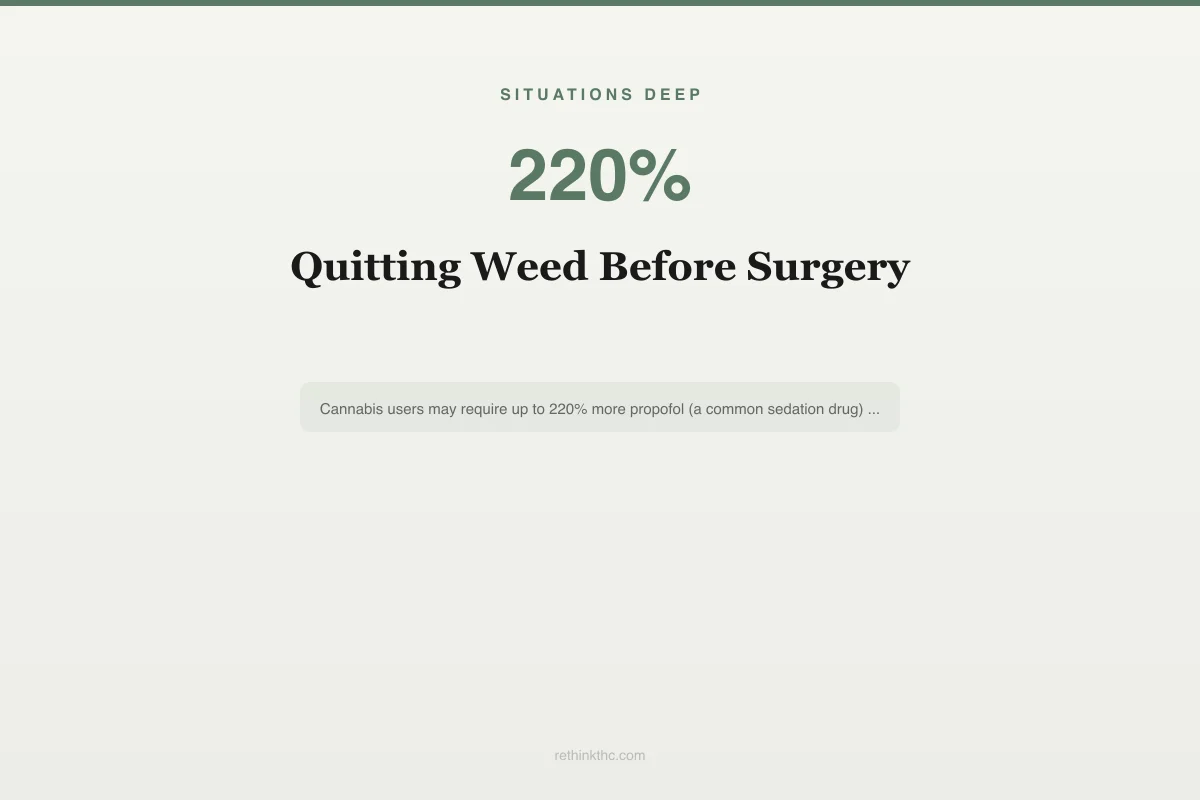
220%
Cannabis users may need up to 220% more propofol to reach adequate sedation, making honest disclosure to your surgical team a safety-critical step before any procedure.
Journal of the American Osteopathic Association, 2020
2 to 4 weeks
Most surgeons recommend quitting weed before surgery at
220%
Cannabis users may need up to 220% more propofol — a common
72 hours
A 2016 review in BMC Anesthesiology found significantly
Journal of the American Osteopathic Association, 2020
 View as image ↗
You have a surgery date on the calendar and you are wondering whether you need to stop using cannabis beforehand. Maybe your surgeon mentioned it briefly, or maybe nobody said a word and you are trying to figure it out on your own. Quitting weed before surgery is one of those topics that falls into a gap between what doctors assume you know and what anyone actually tells you. The answer matters more than most people realize, because cannabis interacts with anesthesia, affects your airways, and changes how your body responds on the operating table.
Here is what the evidence says about why stopping matters, how far in advance to quit, and how to handle withdrawal symptoms during your surgical recovery window.
Key Takeaways
- Most surgeons recommend quitting weed before surgery at least 2 to 4 weeks out to lower the risk of airway problems and anesthesia complications
- Cannabis users may need up to 220% more propofol — a common sedation drug — to reach the same level of anesthesia as non-users, according to a 2019 study in the Journal of the American Osteopathic Association
- Smoking or vaping weed irritates the airways in ways that raise the risk of dangerous spasms during intubation — the moment a breathing tube is placed in your throat
- THC changes your heart rate and blood pressure during surgery, which makes it harder for your anesthesiologist to keep your vitals stable on the operating table
- Telling your surgical team about your cannabis use is critical for safe dosing and monitoring — and it is fully protected by patient confidentiality
- A 2016 review in BMC Anesthesiology found significantly higher rates of airway events in cannabis users during surgery, with the biggest risk in patients who had smoked within 72 hours of the procedure
How Cannabis Affects Anesthesia
How Cannabis Changes Your Surgical Risk Profile
Cannabis users may need up to 220% more propofol for adequate sedation
Under-sedation → intraoperative awareness; over-correction → dangerously low blood pressure
J Am Osteopathic Assoc, 2019
Highest risk within 72 hours of smoking — bronchospasm and laryngospasm
Sudden airway restriction during intubation; extends surgery time
BMC Anesthesiology, 2016
THC increases heart rate 20–100% in some individuals
Unstable vitals on operating table; triggers additional interventions
Clinical Toxicology, 2017
Chronic THC changes GABA receptor function — same receptors anesthetics target
Sedation drugs work differently; harder to predict depth of anesthesia
Anesthesiology, 2020
The most immediate concern for your anesthesiologist is dosing. THC interacts with many of the same neural pathways that anesthetic drugs target, and regular cannabis use changes how your body responds to sedation.
A 2019 study published in the Journal of the American Osteopathic Association found that cannabis users required 220% more propofol to achieve adequate sedation for endoscopic procedures. Propofol is one of the most commonly used drugs for putting patients under. If your anesthesiologist does not know you use cannabis, they may start with a standard dose that is not enough to keep you properly sedated.
This is not a theoretical risk. Under-sedation during surgery can mean you wake up or become aware during the procedure, a phenomenon called intraoperative awareness. Over-correction, where the anesthesiologist increases the dose rapidly after realizing the initial amount was insufficient, carries its own risks including dangerously low blood pressure.
Research published in 2020 in the journal Anesthesiology confirmed that chronic cannabinoid exposure alters the function of GABA receptors in the brain. GABA receptors are the same receptors that drugs like propofol and benzodiazepines target to produce sedation. When those receptors have adapted to regular THC exposure, they respond differently to anesthetic agents. This is why cannabis users often report needing more novocaine at the dentist or feeling sedation wear off sooner than expected.
Airway Risks from Smoking Cannabis
If you smoke or vape cannabis, the airway effects add a second layer of surgical risk. Smoking irritates the bronchial passages and increases mucus production in the lungs. During surgery, when a breathing tube is placed into your trachea (a procedure called intubation), irritated airways are more likely to spasm.
Two specific complications concern anesthesiologists. The first is bronchospasm, a sudden tightening of the muscles around the airways that restricts breathing. The second is laryngospasm, an involuntary closing of the vocal cords that can temporarily block the airway entirely. Both are manageable in an operating room, but they are stressful events that extend surgery time and increase risk.
A 2016 review published in BMC Anesthesiology examined perioperative complications in cannabis users and found a significantly elevated rate of airway events compared to non-smokers. The researchers noted that the risk was highest in patients who had smoked within 72 hours of surgery, but that chronic smoking created baseline airway inflammation that persisted beyond a few days.
This is one reason the recommended cessation window is weeks, not days. Your lungs need time to reduce inflammation and clear excess mucus. If you want to understand the broader recovery process for your respiratory system, the timeline for lung recovery after quitting weed follows a well-documented pattern.
Cardiovascular Effects During Surgery
THC has measurable effects on your cardiovascular system. It typically increases heart rate within minutes of use and can cause fluctuations in blood pressure. In a surgical setting, where your anesthesiologist is carefully controlling your heart rate and blood pressure with medications, these unpredictable cardiovascular responses create complications.
A 2017 study in the journal Clinical Toxicology reported that acute THC exposure increased heart rate by 20 to 100% in some individuals. For most healthy people in everyday life, this is not dangerous. But during surgery, when your body is already under physiological stress, an unexpectedly high or unstable heart rate can trigger additional interventions and monitoring concerns.
Chronic users may also experience rebound cardiovascular effects during the first days of withdrawal. As your body adjusts to the absence of THC, you may notice increased heart rate or blood pressure fluctuations. These effects are part of the broader withdrawal timeline and typically stabilize within the first one to two weeks of cessation.
The Recommended Timeline for Quitting Before Surgery
Most anesthesiologists and surgical guidelines recommend stopping cannabis use at least 2 weeks before a scheduled surgery, with many preferring a 4-week window. The American Society of Anesthesiologists has issued guidance encouraging presurgical cannabis cessation, and individual institutions increasingly include cannabis in their preoperative screening protocols.
The 2-to-4-week recommendation accounts for several overlapping factors. Your airways need approximately 2 weeks of abstinence for acute inflammation to subside meaningfully. Anesthesia sensitivity begins normalizing within 1 to 2 weeks of cessation as GABA receptor function recalibrates. And THC itself, which is stored in fat tissue and released slowly, can take weeks to fully clear your system. If you are curious about the pharmacokinetics, the breakdown of how long THC stays in your system depends on usage frequency, body composition, and metabolism.
If your surgery is scheduled on short notice and you cannot achieve a full 2-to-4-week cessation period, stopping even 48 to 72 hours before the procedure still reduces acute airway irritation and allows your anesthesiologist to plan more accurately. Any reduction in exposure is better than none.
Managing Withdrawal Symptoms Before and After Surgery
One of the underappreciated challenges of quitting weed before surgery is that withdrawal symptoms overlap with surgical recovery in uncomfortable ways. Insomnia, anxiety, appetite loss, nausea, and irritability are common cannabis withdrawal symptoms, and they are also common experiences during post-surgical recovery. When both hit at the same time, the combined effect can be harder than either would be alone.
If you quit 2 to 4 weeks before your surgery date, you give yourself the advantage of getting through the acute withdrawal phase before the procedure. Most cannabis withdrawal symptoms peak between days 3 and 10, then gradually improve over the following 2 to 3 weeks. By timing your cessation so that peak withdrawal happens well before your surgery date, you arrive at the hospital feeling more stable.
For people who use cannabis specifically for pain management or anxiety, this pre-surgical period can feel especially difficult. While cannabis does have proven medical benefits for certain conditions, the surgical risks of continued use outweigh those benefits in the weeks before a procedure. Talk to your surgical team about temporary alternatives. Your doctor may be able to prescribe short-term medications that address the specific symptoms cannabis was managing, without interfering with anesthesia. Understanding how cannabis interacts with other medications is important context for those conversations.
Some practical strategies for this transition period include maintaining a consistent sleep schedule to reduce insomnia, using cold compresses or cool showers for night sweats, staying hydrated, and keeping light meals available for when appetite fluctuates. Physical activity, even walking, can help regulate mood and improve sleep quality during the withdrawal window.
Why Disclosure to Your Surgical Team Matters
The single most important thing you can do if you use cannabis and have upcoming surgery is tell your anesthesiologist. This conversation is protected by doctor-patient confidentiality. Your surgical team is not going to report you or judge you. They need this information to keep you safe.
When your anesthesiologist knows you use cannabis, they can adjust your anesthetic plan accordingly. They can increase monitoring, choose drug combinations that account for altered GABA receptor sensitivity, and prepare for potential airway complications. When they do not know, they are working with incomplete information, and that is where preventable complications happen.
Be specific about your usage. How often you use, what method (smoking, vaping, edibles), how much, and when you last used all affect the anesthetic plan. Edibles, for example, are processed through the liver and can interact with anesthesia medications that are metabolized by the same hepatic enzymes. Your anesthesiologist needs the full picture.
When to Seek Professional Help
If you are finding it difficult to stop using cannabis before your surgery, or if withdrawal symptoms are severe enough to interfere with your daily functioning or pre-surgical preparation, reach out to a healthcare provider. This is especially important if you experience intense anxiety, persistent insomnia lasting more than a week, or significant mood disturbances.
SAMHSA's National Helpline at 1-800-662-4357 offers free, confidential support 24 hours a day, 7 days a week. You can also reach the Crisis Text Line by texting HOME to 741741.
Your surgical team can also help. Many hospitals have pre-surgical optimization programs that can assist with cannabis cessation as part of your overall preparation for the procedure.
Informed Patients Have Better Outcomes
Quitting weed before surgery is not about judgment or abstinence for its own sake. It is about giving your body the best conditions for a safe procedure and a smooth recovery. Understanding the specific ways cannabis interacts with anesthesia, your airways, and your cardiovascular system puts you in a position to make informed decisions and have honest conversations with your surgical team. That knowledge, combined with a clear cessation plan, is the most practical thing you can do to reduce surgical risk.
The Bottom Line
Cannabis interacts with surgery through three mechanisms requiring 2-4 week pre-surgical cessation. Anesthesia: cannabis users may require up to 220% more propofol (2019 Journal of the American Osteopathic Association); chronic THC alters GABA receptor function (2020 Anesthesiology), the same receptors anesthetics target → risk of under-sedation/intraoperative awareness or rapid over-correction causing dangerously low blood pressure. Airway: smoking/vaping irritates bronchial passages → increased risk of bronchospasm (airway muscle tightening) and laryngospasm (vocal cord closure) during intubation; 2016 BMC Anesthesiology review found significantly elevated airway event rates in cannabis users, highest within 72 hours of use. Cardiovascular: THC increases heart rate 20-100% (2017 Clinical Toxicology); unpredictable HR/BP during surgery complicates anesthesia management. Recommended timeline: 2-4 weeks cessation (airway inflammation subsides ~2 weeks, GABA sensitivity normalizes 1-2 weeks, THC clearance from fat tissue ongoing). Even 48-72 hours reduces acute airway risk. Withdrawal-surgery overlap: insomnia, anxiety, appetite loss, nausea common to both — timing cessation so peak withdrawal (days 3-10) occurs before surgery date prevents compounding. Critical: disclose all cannabis use to anesthesiologist (protected by confidentiality) — enables adjusted dosing, enhanced monitoring, preparation for complications. All forms (smoked, vaped, edibles) affect anesthesia; edibles also interact via shared liver metabolic enzymes.
How long before surgery should I stop smoking weed?
Most anesthesiologists recommend stopping at least 2 to 4 weeks before surgery. This gives your airways time to heal from smoke irritation, allows anesthesia sensitivity to normalize, and lets THC begin clearing from your system. If you cannot achieve this timeline, even 48 to 72 hours of abstinence reduces acute airway risk.
Can I use edibles instead of smoking before surgery?
Edibles still deliver THC, which affects anesthesia dosing and cardiovascular function during surgery. While edibles avoid the airway irritation caused by smoking, they are processed through the liver and can interact with anesthesia medications metabolized by the same enzymes. Most surgical guidelines recommend stopping all forms of cannabis, not only smoked products.
Do I have to tell my anesthesiologist I use weed?
Yes. Disclosing cannabis use to your anesthesiologist is critical for safe dosing and monitoring. Cannabis users may need significantly more anesthetic medication, and your team needs to prepare for potential airway and cardiovascular complications. This disclosure is protected by doctor-patient confidentiality.
What happens if I smoke weed the night before surgery?
Smoking cannabis within 24 hours of surgery increases the risk of airway complications like bronchospasm and laryngospasm during intubation. It also means THC is actively affecting your cardiovascular system and anesthesia response. If this has already happened, tell your anesthesiologist before the procedure so they can adjust your care plan.
Will cannabis withdrawal symptoms make surgical recovery harder?
They can. Insomnia, anxiety, appetite loss, and nausea from cannabis withdrawal overlap with common post-surgical symptoms. Quitting 2 to 4 weeks before surgery lets you get through peak withdrawal before the procedure, so you are not dealing with both at the same time.
Does CBD need to be stopped before surgery too?
Yes. While CBD does not produce intoxication, it is metabolized by the same liver enzymes (CYP450 system) that process many anesthesia and perioperative medications. CBD can alter the blood levels of drugs like propofol, midazolam, and certain pain medications by inhibiting their breakdown. Most surgical guidelines recommend stopping all cannabinoid products, including CBD, at least 1 to 2 weeks before surgery to avoid unpredictable medication interactions.
Sources & References
- 1RTHC-08512·Murri, Martino Belvederi et al. (2026). “Large meta-analysis finds regular cannabis use raises both pro-inflammatory and anti-inflammatory markers, not just one or the other.” Brain.Study breakdown →PubMed →↩
- 2RTHC-08708·Weidberg, Sara et al. (2026). “Nearly 29% of North Americans have tried CBD, about double the rate in Europe.” Addiction (Abingdon.Study breakdown →PubMed →↩
- 3RTHC-06153·Candeloro, Bruno Moreira et al. (2025). “Meta-Analysis Found CBD and THC Had Trivial Effects on Blood Inflammation Markers.” International journal of molecular sciences.Study breakdown →PubMed →↩
- 4RTHC-06220·Chou, Roger et al. (2025). “Cannabis products with THC showed small pain improvements with significant side effects, while CBD alone did not help.” Pain and therapy.Study breakdown →PubMed →↩
- 5RTHC-05271·Ding, Cheng et al. (2024). “Meta-analysis found cannabis use disorder linked to more complications and higher costs after hip and knee replacements.” The Journal of the American Academy of Orthopaedic Surgeons.Study breakdown →PubMed →↩
- 6RTHC-03713·Bilbao, Ainhoa et al. (2022). “Major meta-analysis of 152 RCTs finds cannabinoid effectiveness varies dramatically by specific drug and condition.” BMC medicine.Study breakdown →PubMed →↩
- 7RTHC-04223·Silvinato, Antônio et al. (2022). “Meta-analysis confirmed CBD reduces seizures by 33% in treatment-resistant epilepsy.” Revista da Associacao Medica Brasileira (1992).Study breakdown →PubMed →↩
- 8RTHC-03179·Gunning, Boudewijn et al. (2021). “CBD reduced seizures in both Dravet and Lennox-Gastaut syndromes, with enhanced effects when combined with clobazam.” Acta neurologica Scandinavica.Study breakdown →PubMed →↩