Harm Reduction & Moderation
Stay Calm
Helping someone through a green-out requires calm verbal reassurance that the experience is temporary, positioning them on their side, and offering slow sips of water while avoiding alcohol or more cannabis.
Gertsch et al., PNAS, 2008
Assess the Situation
covered in detail
Step One: Move Them to a Safe Space
covered in detail
Step Two: Reassure Verbally
covered in detail
Gertsch et al., PNAS, 2008
 View as image ↗
Someone at the party has had too much. They are pale, sweating, nauseous, and visibly panicking. Maybe they are a friend, a partner, or someone you just met. Either way, you are the sober or more-sober person in the room, and what you do in the next thirty minutes will determine whether this becomes a manageable rough patch or a traumatic experience they associate with cannabis permanently. The good news is that helping someone through a green-out requires no medical training, just calm presence and basic knowledge.
Key Takeaways
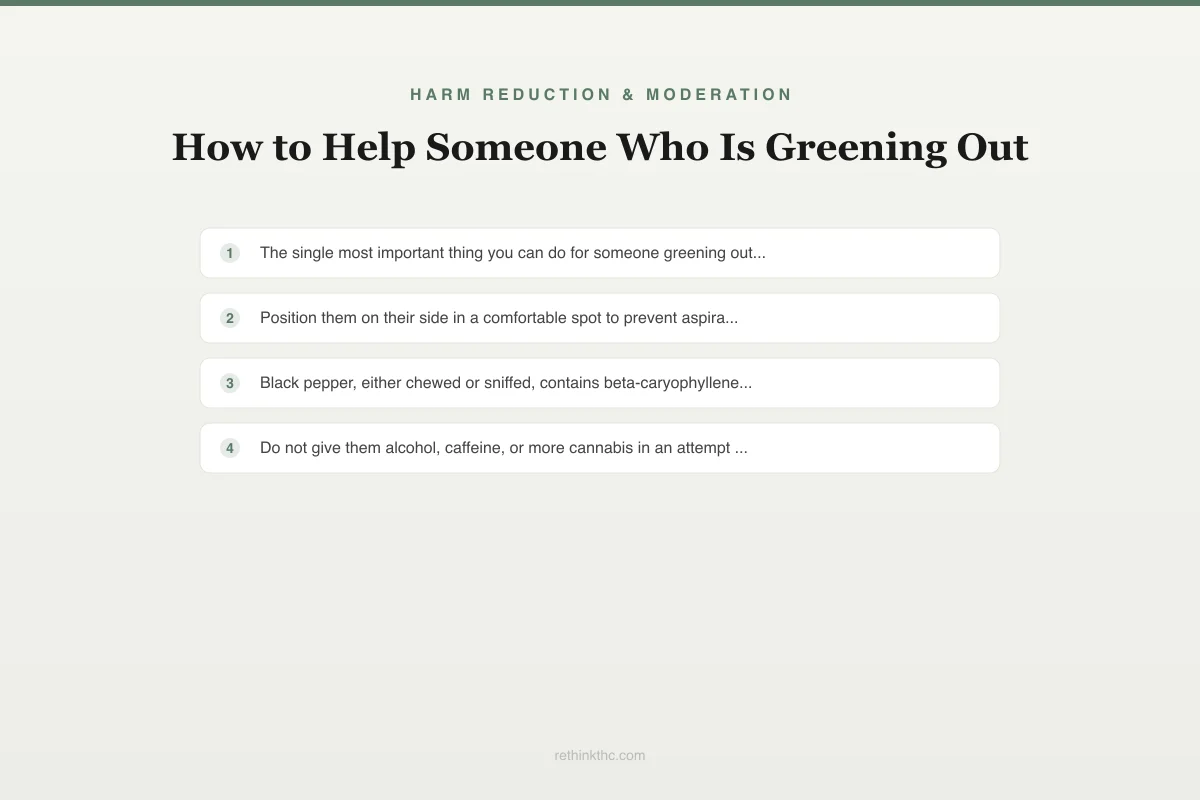
- The most important thing you can do for someone greening out is stay calm and confidently reassure them that this is temporary, has a known cause, and will pass within a predictable timeframe
- Lay them on their side in a comfortable spot to prevent choking if they vomit, and offer small slow sips of water rather than big gulps that may trigger more nausea
- Black pepper — either chewed or sniffed — contains beta-caryophyllene, a terpene that binds to CB2 receptors and may help dial down THC's effects, and anecdotal reports consistently support its calming effect
- Do not give them alcohol, caffeine, or more cannabis in an attempt to help — all of these will make things worse through added intoxication, heart rate stimulation, or compounded THC effects
- Call emergency services if the person loses consciousness and cannot be woken, has a seizure, reports severe chest pain, or consumed cannabis mixed with unknown substances
- How you handle the aftermath matters — normalizing the experience, skipping the jokes, and respecting their future choices about cannabis prevents one bad episode from becoming a lasting traumatic memory
Assess the Situation
Emergency Response
Green-Out Response: Step by Step
No medical training needed — calm presence and basic knowledge
Never do
Call 911 if: unconscious, seizure, chest pain, or unknown substances
Green-Out Response StepsBefore you act, take ten seconds to evaluate what you are dealing with.
Confirm it is cannabis only. Ask directly: what did you take, and did you take anything else? If alcohol is involved, the symptoms can be more severe and the management slightly different. If other substances beyond cannabis and alcohol are potentially involved, your threshold for calling emergency services should be lower.
Gauge severity. A person who is nauseous, anxious, and unsteady but conscious and communicating is having a typical green-out. A person who is unresponsive, having a seizure, or reporting severe chest pain needs emergency medical attention.
Check their environment. Are they in a safe location? Are they near anything they could fall on or into? Is the space well-ventilated? Is it too hot, too cold, or too loud? Environmental factors that would be minor annoyances normally become significant stressors during a green-out.
Step One: Move Them to a Safe Space
Get the person to a calm, comfortable, and safe location. This means away from loud music, bright lights, crowds, and stimulating activity. A quiet room, a porch, or a comfortable couch works well. The goal is to reduce sensory input because THC amplifies sensory processing, and overstimulation compounds the distress.
Have them sit or lie down. If they are dizzy or feel faint, lying down is better because it eliminates the orthostatic blood pressure drop that standing causes. If there is any chance they might vomit, position them on their side rather than their back. This is the recovery position, and it prevents aspiration, the inhalation of vomit, which is the most serious physical risk during any episode of heavy intoxication with vomiting.
If they want to sit rather than lie down, that is fine. Let them choose the position that feels most comfortable. Some people find that lying down makes the dizziness worse because of a spinning sensation.
Step Two: Reassure Verbally
This is the single most impactful thing you can do. The majority of the distress during a green-out is psychological, driven by the fear that something is seriously wrong, that the feeling will never end, or that they are dying. Calm, confident reassurance directly addresses this.
Speak in a steady, unhurried voice. Make eye contact if they are comfortable with it. Say things like:
"You consumed too much THC. This is uncomfortable but it is not dangerous. Your body knows how to process this."
"This feeling has a timeline. It will start getting better within about thirty minutes."
"You are safe. I am here and I am not going anywhere."
Do not say things that minimize or dismiss their experience. Statements like "you're fine, just relax" or "it's just weed" can feel invalidating when the person is genuinely suffering. Acknowledge that they feel terrible while also providing the factual reassurance that this is temporary and manageable.
If they are experiencing paranoid thoughts, gently reality-test with them. If they say something like "I think I'm having a heart attack," you can respond with: "Your heart is beating fast because THC lowers your blood pressure and your heart speeds up to compensate. That is a normal response. It is not a heart attack."
Step Three: Hydrate
Offer water, but in small sips. Large gulps on an already nauseous stomach can trigger vomiting. Slow, steady hydration helps with the dry mouth, replaces fluid if they do vomit, and gives them something concrete to focus on.
Room temperature water is generally better tolerated than ice cold water on a nauseous stomach. If they are able to tolerate it, a beverage with electrolytes can help replace what may be lost through sweating and vomiting, but plain water is perfectly fine.
Avoid sugary sodas, energy drinks, or anything carbonated, as the carbonation can increase nausea in some people. Definitely avoid alcohol or caffeinated beverages.
Step Four: Try the Black Pepper Trick
This one sounds like folk medicine, but there is a plausible pharmacological basis. Black pepper contains beta-caryophyllene, a terpene that is also found in cannabis and that binds to CB2 receptors. Research by Dr. Ethan Russo and others has suggested that beta-caryophyllene can modulate the anxiety-producing effects of THC through a mechanism involving the endocannabinoid system's balancing pathways.
Have the person either sniff whole black peppercorns or chew on two or three of them. Anecdotal reports from both cannabis users and emergency medicine professionals consistently describe a calming effect within a few minutes. The evidence base is limited to preclinical research and extensive anecdotal reporting rather than controlled human trials, but the intervention is risk-free and easy to try.
Lemon also contains terpenes, particularly limonene, that may have a similar modulating effect. Sniffing a cut lemon or drinking lemon water is another commonly reported folk remedy with plausible terpene-based mechanisms.
Step Five: Manage the Nausea
If the person is nauseous, do not try to suppress the vomiting. If their body wants to vomit, letting it happen often provides significant relief. Have a trash can, bucket, or clear path to a toilet available.
After vomiting, offer water to rinse their mouth and rehydrate. A cool, damp cloth on the forehead or back of the neck can help with the nausea and the sweating.
If they are experiencing persistent dry heaving without productive vomiting, a small piece of bland food, like a plain cracker, can sometimes settle the stomach by giving it something to work with. Do not push food if they are not ready for it.
Step Six: Help Regulate Breathing
Anxiety during a green-out often produces rapid, shallow breathing, which compounds the dizziness and lightheadedness through hyperventilation. If you notice the person breathing quickly, gently guide them toward slower breathing.
A simple approach: breathe with them. Say "breathe in with me" and inhale slowly for a count of four. "Now out with me" and exhale slowly for a count of six. The slightly longer exhale activates the parasympathetic nervous system and helps counteract the fight-or-flight response. Do this for five to ten cycles.
Do not tell them to "just breathe" without providing structure. During a panic state, the instruction to breathe feels impossibly vague. Counting and breathing together gives them a concrete anchor.
What Not to Do
Several well-intentioned responses actually make things worse.
Do not give them more cannabis. The idea that you can "smoke through" a green-out is a myth. Additional THC will compound the effects and extend the duration. CBD, on the other hand, does modulate THC's effects and could theoretically help, but the research is mixed and the effect takes time.
Do not give them alcohol. Alcohol increases THC blood levels and adds its own intoxicating effects. The combination of a green-out and alcohol intoxication is significantly worse than either alone.
Do not give them caffeine. Caffeine increases heart rate and can worsen the tachycardia and anxiety that are already prominent symptoms.
Do not put them in a cold shower. This old-school approach to sobering people up is counterproductive. The sudden cold triggers a sympathetic nervous system response that increases heart rate and blood pressure, worsening the cardiovascular symptoms. It can also cause a vasovagal reaction and fainting. A cool cloth on the forehead is sufficient.
Do not leave them alone. The anxiety and paranoia of a green-out can escalate dramatically without social anchoring. Even if they want to be alone, check in every few minutes. If they are vomiting, someone needs to be present to ensure they do not aspirate.
Do not mock them. Laughing at someone who is greening out, recording them, or making jokes about their state is cruel and can cause lasting psychological association between cannabis and humiliation or trauma.
When to Call Emergency Services
The vast majority of green-outs resolve without medical intervention. However, call 911 or your local emergency number if:
The person loses consciousness and cannot be roused by verbal or physical stimulation. Brief fainting followed by quick recovery is common during green-outs, but sustained unresponsiveness warrants medical evaluation.
The person has a seizure. While extremely rare with cannabis alone, seizures require emergency medical attention.
The person reports severe chest pain, not just awareness of rapid heartbeat. While tachycardia is normal during a green-out, severe chest pain could indicate a cardiac event, particularly in people with pre-existing conditions.
The person may have consumed cannabis laced with other substances. Synthetic cannabinoids, fentanyl-contaminated products, and other adulterants can produce dangerous effects that cannabis alone does not.
The person has a known medical condition that could be complicated by the cardiovascular effects of a green-out, such as a heart condition or severe anxiety disorder.
The Aftermath
Once the acute phase passes, the person will likely feel exhausted, embarrassed, and possibly shaky. How you handle the aftermath matters.
Normalize the experience. Greening out happens to nearly everyone at some point. Reassure them that this does not mean something is wrong with them or that they can never use cannabis again. It means they consumed more than their body could handle in that moment.
Help them recover. Offer food when they are ready. Bland, carbohydrate-rich foods tend to be well tolerated. Make sure they have a comfortable place to rest. Check in the next day.
Discuss prevention without lecturing. When the time is right, not during the episode, a conversation about starting low, waiting before redosing, and knowing their limits can help prevent recurrence. Frame it as practical information, not judgment.
Respect their response. Some people green out once and never use cannabis again. Others adjust their dosing and continue without problems. Both responses are completely valid. Do not pressure them in either direction.
The Bottom Line
Step-by-step guide to helping someone greening out covering assessment, safe positioning, verbal reassurance, hydration, black pepper remedy, nausea management, breathing regulation, what not to do, emergency criteria, and aftermath care. Assessment: confirm cannabis-only (lower threshold for EMS if other substances involved); gauge severity (conscious/communicating = typical green-out, unresponsive/seizure/chest pain = call 911); check environment safety. Step 1 — safe space: quiet location away from stimulation; lying on side (recovery position prevents aspiration); let them choose comfortable position. Step 2 — reassurance: most impactful intervention; steady voice, specific factual statements ("this is temporary, ~30 minutes to improve"); acknowledge suffering without minimizing ("you're fine" feels invalidating); reality-test paranoid thoughts with physiological explanations. Step 3 — hydration: small slow sips of room-temperature water; avoid carbonated/caffeinated/alcoholic beverages. Step 4 — black pepper: beta-caryophyllene (CB2-binding terpene) may modulate THC anxiety; chew 2-3 peppercorns or sniff; Russo et al. mechanism; lemon/limonene similar; risk-free intervention. Step 5 — nausea: do not suppress vomiting (provides relief); cool damp cloth on forehead/neck; bland cracker after vomiting if tolerated. Step 6 — breathing: guide 4-count inhale, 6-count exhale (longer exhale activates parasympathetic); breathe with them; 5-10 cycles. What NOT to do: no more cannabis, no alcohol, no caffeine, no cold shower (triggers sympathetic response), do not leave alone, do not mock/record. Emergency: unresponsive, seizure, severe chest pain, unknown substances, pre-existing cardiac conditions. Aftermath: normalize experience, offer food/rest, discuss prevention without lecturing, respect their future choices.
What is the first thing to do when someone greens out?
Assess the situation: confirm it is cannabis only (ask directly about other substances), gauge severity (conscious and communicating = typical green-out; unresponsive, seizure, or severe chest pain = call 911), and check their environment for safety hazards. Then move them to a quiet, comfortable space away from loud music, bright lights, and crowds. Have them lie on their side (recovery position to prevent aspiration if they vomit) or sit if lying down worsens dizziness. Reduce sensory input — THC amplifies sensory processing, so overstimulation compounds distress.
Does the black pepper trick actually work for greening out?
There is a plausible pharmacological basis. Black pepper contains beta-caryophyllene, a terpene that binds to CB2 receptors and may modulate THC's anxiety-producing effects through the endocannabinoid system's balancing pathways. Research by Dr. Ethan Russo supports this mechanism. Have the person sniff whole peppercorns or chew 2-3 of them. Anecdotal reports from cannabis users and emergency medicine professionals consistently describe a calming effect within minutes. The evidence is preclinical rather than from controlled human trials, but the intervention is risk-free and easy to try. Lemon (limonene terpene) may have a similar effect.
Should you let someone vomit during a green-out?
Yes. Do not try to suppress vomiting — if their body wants to vomit, letting it happen often provides significant relief. Have a trash can, bucket, or clear path to a toilet ready. After vomiting, offer water to rinse their mouth and rehydrate. A cool, damp cloth on the forehead or back of the neck helps with nausea and sweating. If they are experiencing persistent dry heaving without productive vomiting, a small piece of bland food like a plain cracker can sometimes settle the stomach. Do not push food if they are not ready.
What should you NOT do when someone is greening out?
Do not give them more cannabis (additional THC compounds effects and extends duration). Do not give alcohol (increases THC blood levels). Do not give caffeine (worsens tachycardia and anxiety). Do not put them in a cold shower (triggers sympathetic nervous system response that increases heart rate and can cause fainting). Do not leave them alone (anxiety escalates without social anchoring, and someone must be present if they vomit). Do not mock, laugh at, or record them — this can cause lasting psychological trauma and permanently associate cannabis with humiliation.
When should you call 911 for a green-out?
Call emergency services if: the person loses consciousness and cannot be roused by verbal or physical stimulation (brief fainting with quick recovery is common, but sustained unresponsiveness needs evaluation); the person has a seizure (extremely rare with cannabis alone); the person reports severe chest pain (not just awareness of rapid heartbeat); the person may have consumed cannabis laced with other substances (synthetic cannabinoids, fentanyl contamination); or the person has a known medical condition that could be complicated by cardiovascular stress, such as a heart condition.
How do you calm someone down who is panicking from too much THC?
Speak in a steady, unhurried voice with specific factual reassurance: "You consumed too much THC. This is uncomfortable but not dangerous. It will start getting better within about 30 minutes. I am here and not going anywhere." Avoid minimizing statements like "you're fine, just relax" — acknowledge they feel terrible while confirming it is temporary. For paranoid thoughts, reality-test gently with physiological explanations. Guide breathing: inhale for 4 counts, exhale for 6 counts (longer exhale activates parasympathetic nervous system). Breathe with them for 5-10 cycles rather than just saying "breathe."
Sources & References
- 1RTHC-08266·Friesen, Erik Loewen et al. (2026). “Living Near a Cannabis Store Linked to 12% More Cannabis ER Visits.” Annals of internal medicine.Study breakdown →PubMed →↩
- 2RTHC-08351·Ilgen, Mark A et al. (2026). “An Estimated 7.2 Million Americans May Have Cannabinoid Hyperemesis Syndrome.” medRxiv : the preprint server for health sciences.Study breakdown →PubMed →↩
- 3RTHC-07685·Smith, Shemyia A et al. (2025). “Haloperidol and Capsaicin Show More Promise Than Standard Anti-Nausea Drugs for CHS.” Cureus.Study breakdown →PubMed →↩
- 4RTHC-07953·Williams, Mollie V et al. (2025). “How Emergency Departments Handle Cannabis-Related Emergencies.” Emergency medicine practice.Study breakdown →PubMed →↩
- 5RTHC-08183·Conrad, Saranrat W et al. (2026). “Cannabis Poisoning ER Visits Rising But Less Severe Than Other Substances.” The American journal of drug and alcohol abuse.Study breakdown →PubMed →↩
- 6RTHC-08265·Foo, Cheryl Y S et al. (2026). “Cannabis Legalization Hit Psychiatric Teens Hardest — 4x More Cannabis Disorders.” American journal of preventive medicine.Study breakdown →PubMed →↩
- 7RTHC-08332·Hendrickson, Robert G et al. (2026). “THC Doses Over 30mg Cause Severe Symptoms in Young Children.” Clinical toxicology (Philadelphia.Study breakdown →PubMed →↩
- 8RTHC-08384·Kilani, Yassine et al. (2026). “Cannabis Use Increases ER Visits and Hospitalizations for Gastroparesis Patients.” The American journal of gastroenterology.Study breakdown →PubMed →↩